
Arabic for Diplomats and International Organisations
Professional Arabic training in Amman, built around your mandate, your schedule and the work your team actually does in Arabic.
Since 2016 we have trained staff from United Nations agencies, diplomatic missions and international organisations based in Jordan. Institutional training is not a general course with a different invoice: your team has security requirements, schedules that move without warning, rotating postings, and professional vocabulary that has to be exact. We build the programme around that.
Teams we have trained
- UNRWA
- German Embassy
- Embassy of Japan
- Embassy of Spain
- Netherlands Embassy
- Embassy of Italy
Four kinds of professional learner
Most of our institutional students fall into one of these groups. Programmes are shaped differently for each.
Diplomatic missions
Officers and locally engaged staff who need Arabic for meetings, protocol, media monitoring and daily life in Amman.
UN agencies and INGOs
Programme staff, field officers and coordinators working directly with communities — where tone and accuracy carry real consequences.
Researchers and analysts
Professionals who need to read Arabic sources, follow regional media and conduct interviews without an interpreter in the room.
New arrivals and families
Staff starting a two- or three-year posting who want to settle in quickly — including spouses and children.
Why institutional training is different
A diplomat preparing for a ministry meeting and a student on a gap year need very different things from the same language.
Schedules move
Missions get called away, field visits run long, a crisis reshuffles the week. We hold your slot and reschedule rather than penalise.
Vocabulary is specific
Humanitarian terminology, diplomatic register, legal and administrative Arabic. These are taught deliberately, not left to be picked up along the way.
Register matters more than volume
Knowing when Modern Standard Arabic is expected and when Levantine is the right choice is often more useful to your team than knowing more words.
Progress has to be documented
Institutions need records. We provide placement assessments, written progress reports and attendance documentation suitable for HR and training budgets.
Five ways to run a programme
Most institutions combine two of these — for example one-to-one for senior staff alongside a small group for a department.
A dedicated teacher, fully tailored content, flexible timing. The usual choice for senior staff and anyone whose week is unpredictable.
Teams of two to six learning together at a shared level. Cost-effective, and it builds a common working vocabulary across a department.
We teach at your offices, removing travel time and meeting security requirements that make off-site training difficult.
Live lessons with the same teachers and materials. For remote team members, for preparation before arrival, or to continue after a posting ends.
A concentrated block for newly arrived staff who need functional Arabic in their first weeks rather than their first year.
Two languages, one programme
Arabic is not one register. Most professional programmes need both, weighted according to the work.
العامية الشامية
Levantine Arabic
The language actually spoken in Amman and across Jordan, Palestine, Syria and Lebanon. Essential for field work, community engagement, colleagues, drivers and neighbours. Taught by native Ammani teachers.
اللغة العربية الفصحى
Modern Standard Arabic
The written and formal language of documents, official correspondence, news media, legislation and public speech. Essential for reading, analysis and formal settings.
مصطلحات متخصّصة
Specialised modules
Built into your programme according to your mandate: humanitarian and protection terminology, diplomatic and protocol language, legal and administrative Arabic, media and political vocabulary.
The people who will train your team
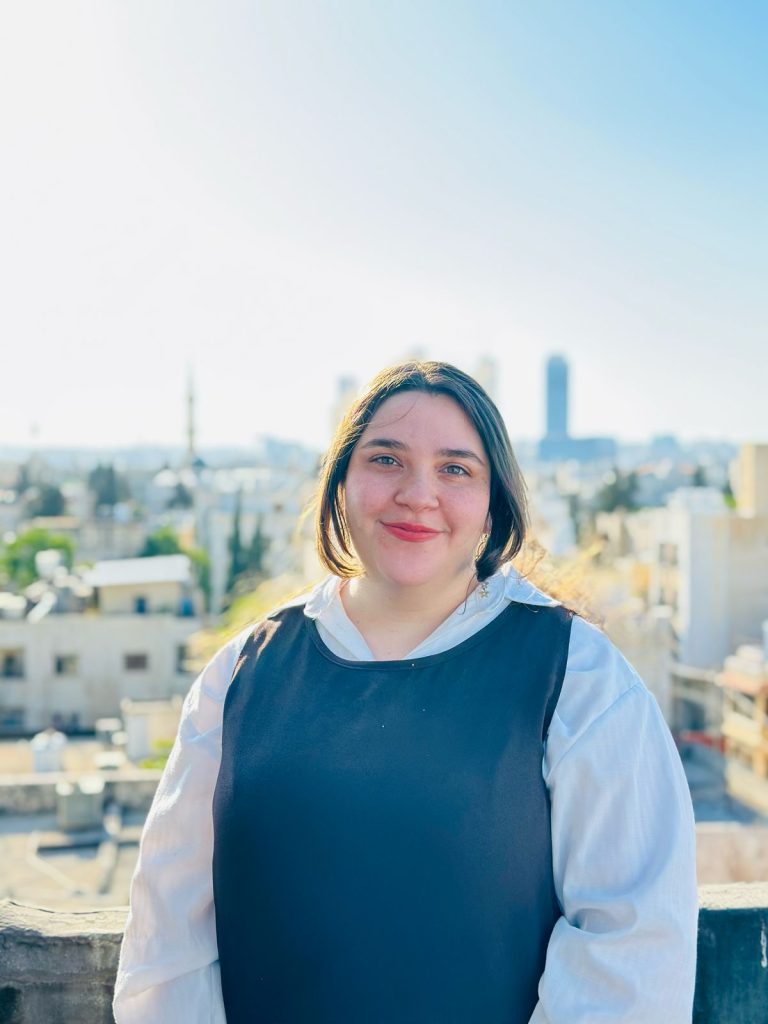
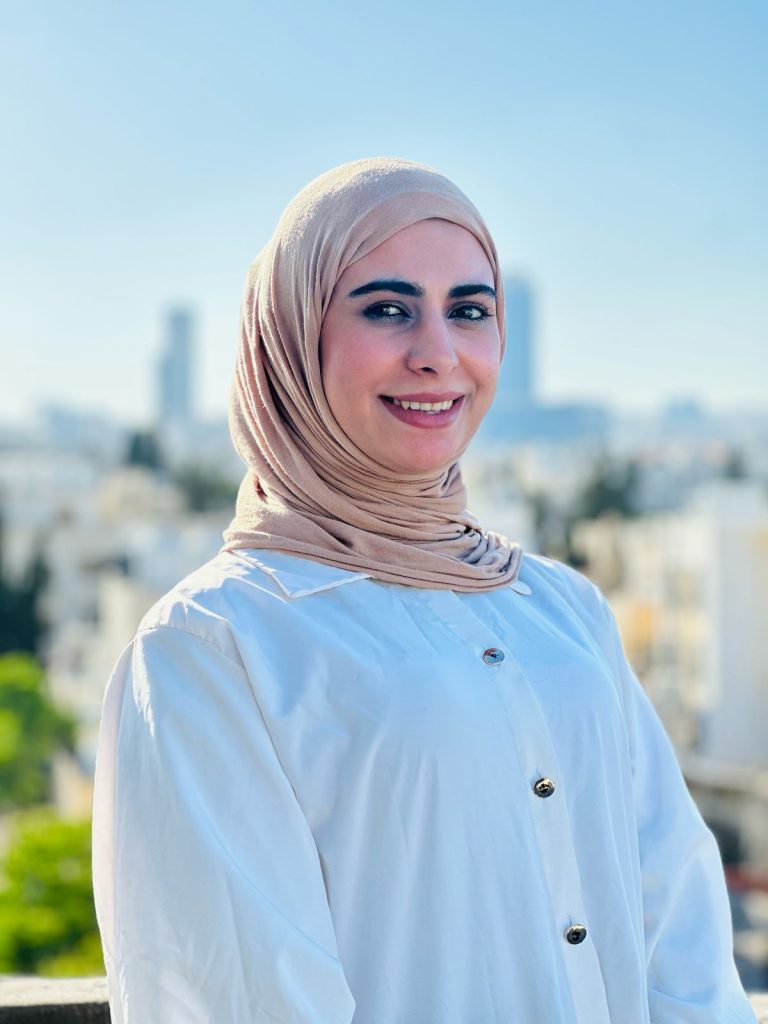
Seven Jordanian teachers, none with fewer than five years of experience teaching Arabic to non-native speakers — in Jabal Al-Weibdeh and online.
Meet the full team →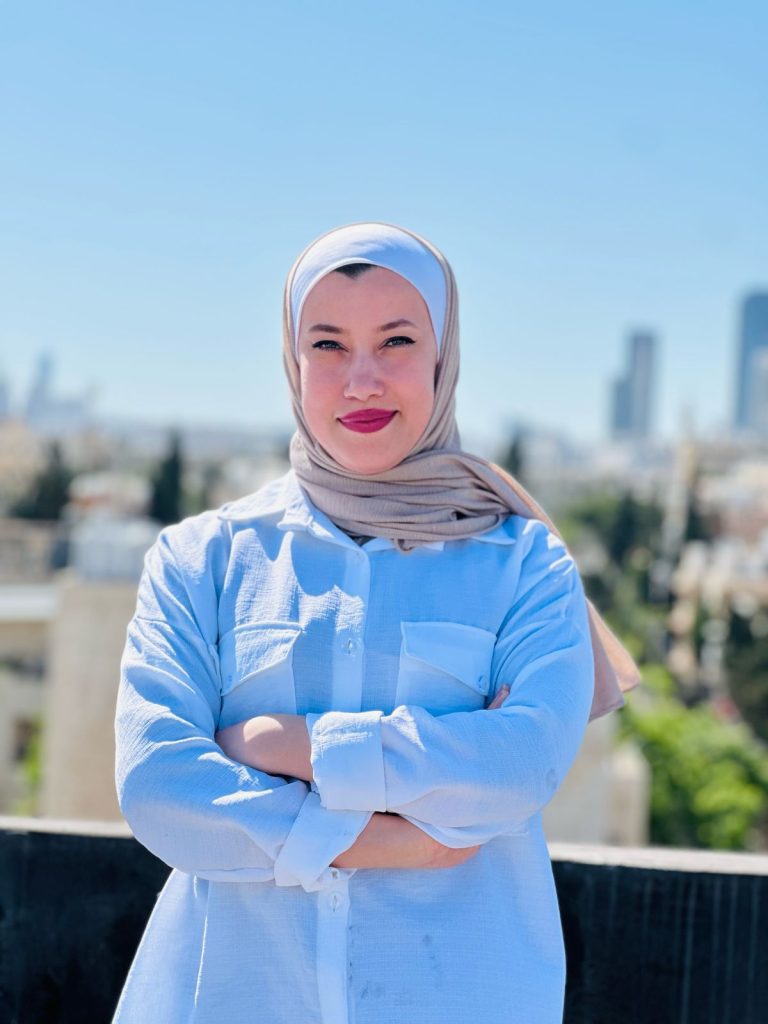

How it works
From first conversation to first lesson, usually within two weeks.
-
Consultation
We meet your training focal point to understand goals, numbers, levels and constraints.
-
Placement assessment
Each participant takes a short assessment, so groups are formed accurately and nobody is placed in the wrong level.
-
Written proposal
You receive a structured proposal — format, hours, schedule, curriculum outline and costs — in a form suitable for internal approval.
-
Delivery
Lessons begin. Your focal point has a direct contact at Misbah throughout the programme.
-
Progress reporting
Regular written reports on attendance and progress, formatted for HR and training records.
Before you write to us
Do you invoice institutions directly?
Can you teach at our premises?
What happens when staff travel or miss lessons?
Can spouses and children join?
Do participants receive certificates?
Do you teach beginners, or only staff who already have some Arabic?
Let's build your team's programme
Tell us who needs to learn, what they need Arabic for, and how their week looks. You will have a written proposal within three working days.
+962 79 917 3008 ·
misbahcenter@gmail.com
Al-Shariaah College St, Jabal Al-Weibdeh, Amman